Brown-Peterson Task
Description
A short-term memory task where participants memorize consonant trigrams and recall them after a distractor-filled delay.
Measures: Short-term memory, decay of short-term memory traces, interference effects
Memory Processing Speed
About This Test
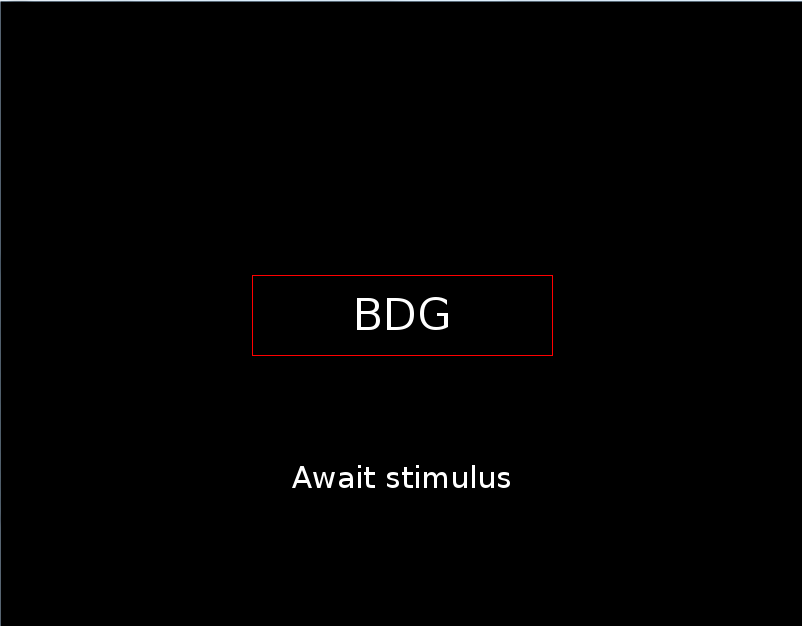
On each trial, three consonants (a CVC trigram) are briefly displayed, followed by a three-digit number. Participants count backward by 3s from the number in time with auditory/visual cues for varying delay intervals (3-18 seconds). After the delay, participants recall the original consonants. Accuracy typically declines with longer delays, demonstrating rapid forgetting from short-term memory.
Test Details
brownpetersonbrownpeterson.pbl🚀 Try Without Registration
Run this test immediately without creating an account. Data stays in your browser.
Researcher Access Benefits
To save configurations, upload data, use translations, track completion, and manage studies, please log in or register for an account.
Scientific Background
Original Task References:
These references describe the original task that this PEBL implementation is based on.
- Peterson, L. R., & Peterson, M. J. (1959). Short-term retention of individual verbal items. Journal of Experimental Psychology, 58(3), 193-198.
PEBL-Specific References:
These studies used the PEBL version of this task.
- Mueller, S. T. (2011). The PEBL Brown-Peterson Task. Computer software retrieved from http://pebl.sf.net/battery.html
Data Output
Trial-by-trial data with consonant trigram, distractor number, delay duration, recalled response, accuracy, and response time.
brownpeterson-{subnum}.csv
Data Columns
| Column Name | Description |
|---|---|
| subcode | Participant ID |
| trial | Trial number |
| ccc | The consonant trigram presented for memorization (e.g., BDG) |
| number | The three-digit number used as the starting point for backward counting |
| delay | Distractor delay duration in seconds (e.g., 3, 6, 9, 12, 15, 18) |
| resp | The three consonants recalled by the participant |
| corr | Whether recall was exactly correct (1) or not (0) |
| rt | Response time in milliseconds from recall prompt to Enter key |
Scoring and Interpretation
Example Data
example-data.csv Primary
Trial-by-trial Brown-Peterson data
| subcode | trial | ccc | number | delay | resp | corr | rt |
|---|---|---|---|---|---|---|---|
| example | 1 | TRB | 288 | 9 | TRB | 1 | 2273 |
| example | 2 | CJK | 858 | 6 | CJK | 1 | 2799 |
| example | 3 | RGH | 337 | 3 | RGH | 1 | 3137 |
| example | 4 | KDT | 893 | 9 | CRG | 0 | 7525 |
| example | 5 | NDZ | 446 | 6 | NDZ | 1 | 13207 |
| example | 6 | BVX | 169 | 3 | BVX | 1 | 2422 |
example-report.html Report
HTML summary report with accuracy and RT by delay interval
📊 Interactive HTML Report Preview Open in new window →
Sample data showing typical output format. Actual values will vary by participant.
About This Test
A short-term memory task where participants memorize consonant trigrams and recall them after a distractor-filled delay.
Category: Memory
Estimated Duration: 15 minutes
Available Translations: 7 languages
Documentation Status: Complete